

A drug class scaling faster than almost anything in modern pharma, moving into settings built for volume rather than surveillance, has opened a monitoring gap.
GLP-1 receptor agonist (semaglutide, tirzepatide, or a sibling compound) is now taken by one in eight American adults for obesity or type 2 diabetes.¹ Prescription volume has more than tripled since 2020,² and it keeps climbing as indications broaden into cardiovascular risk reduction, metabolic dysfunction-associated steatohepatitis, and beyond.³ Access is expanding just as fast: primary care and direct-to-consumer telehealth now write a growing share of these prescriptions,¹ often without the nursing staff or lab draws that specialty endocrine and obesity-medicine clinics built around this drug class from the start.
That combination, a drug class scaling faster than almost anything in modern pharma, moving into settings built for volume rather than surveillance, has opened a monitoring gap. It sits exactly where the physiological risk is highest: the days immediately after a dose is started or increased.
The dehydration effect everyone warns about, and almost nobody measures
GLP-1 receptor agonists slow gastric emptying and blunt appetite by design. The tradeoff is gastrointestinal tolerability. Roughly half of users report nausea; about one in three reports diarrhea, most intensely during initiation and dose escalation.⁴ Reduced oral intake plus GI fluid losses is a direct, physiologically plausible route to volume depletion and electrolyte disturbance, and a growing body of post-marketing pharmacovigilance data links that pathway to acute kidney injury in a subset of patients, typically when GI symptoms are poorly tolerated and fluid replacement is inadequate.⁵,⁶
None of this happens in a vacuum. Dehydration is already an established, independent risk factor for AKI, with rates roughly three times higher in dehydrated hospitalized patients than in matched non-dehydrated ones.⁷ Older adults, patients with baseline renal impairment, and anyone on diuretics, ACE inhibitors, ARBs, or NSAIDs are disproportionately vulnerable⁸,⁹. And those are exactly the populations increasingly represented among GLP-1 users as indications expand into cardiometabolic and older-adult care.¹⁰ National poison center data show serious medical outcomes and healthcare-facility admissions tied to GLP-1 exposures both rose sharply between 2021 and 2022, tracking the broader prescribing curve.¹¹
To be precise about what this is and is not: the FLOW trial found semaglutide reduces chronic kidney disease progression in type 2 diabetes over the long term.¹² The dehydration-mediated AKI risk described here is a separate, shorter-horizon tolerability problem, driven by GI symptoms and suppression of thirst rather than the drug’s core mechanism. Both things are true about the same molecule. Only one of them currently has a way to catch it before it becomes an ER visit.
“Staying hydrated” is not a monitoring strategy
Ask a clinician what the standard of care is for hydration during GLP-1 titration, and the honest answer is: patient self-report, a periodic office visit, and whatever labs get ordered if someone remembers to flag a concern. That’s a snapshot, not a trajectory, and it depends entirely on a patient recognizing a problem or a clinician proactively testing for one.¹³
The mismatch is structural. The window of highest dehydration risk, the days right after a dose starts or steps up, is precisely when a patient is least likely to be in clinic or have labs drawn.⁵ By the time symptoms are severe enough to prompt an ED visit, renal injury may already be underway.¹³ Dehydration is already one of the most common causes of preventable hospital admission in older adults;¹⁴ delayed detection in the GLP-1 context adds a fast-growing population on top of that base rate, with discontinuation of an otherwise-working therapy as a common downstream consequence.¹⁵
Continuous glucose monitors, smart scales, and consumer fitness trackers don’t close the gap. CGMs measure glucose, not fluid or electrolyte status. Smart scales conflate weight change with food intake and clothing. Wearables track heart rate, not what is driving it. None of these solutions answer the specific question that matters here: is this patient losing fluid and electrolytes faster than they’re replacing them, right now, between visits.
What continuous, non-invasive monitoring could change
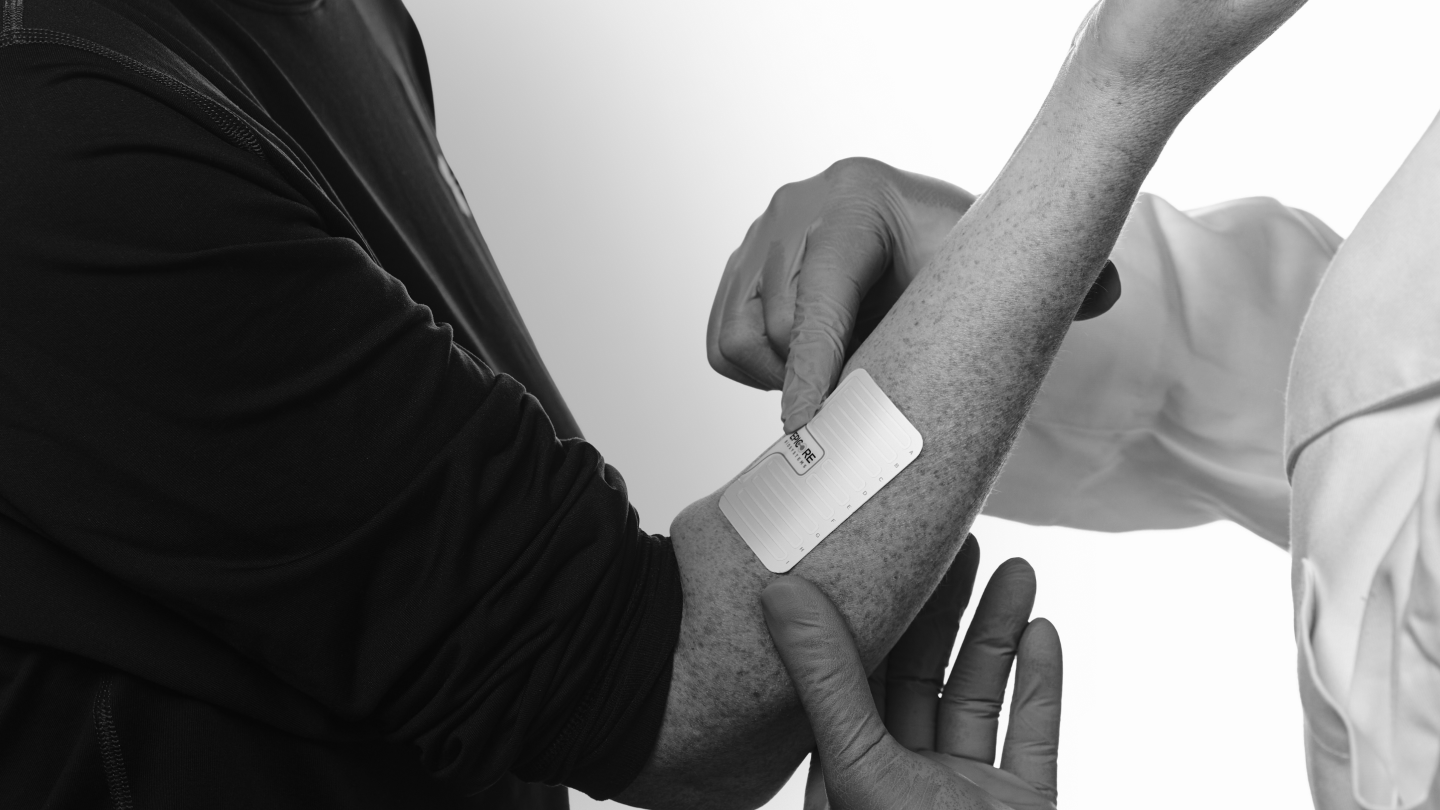
Epicore Biosystems has developed the Adaptive Physiological and Exocrine (APEX) platform, a soft, skin-interfaced wearable that continuously and non-invasively measures fluid loss, sweat sodium concentration, skin temperature, bioimpedance-derived body water status, and heart rate, in a single unified device, without a blood draw.¹⁶ The underlying platform isn’t a research prototype. Two of its core measurements, chloride and sodium, are commercially deployed today in Connected Hydration. Epicore’s hydration-sensing technology has an established validation record across athletic, industrial, and clinical settings and is in active field use across 20+ multinational organizations, including the U.S. Air Force, United Airlines, and Schlumberger, with deployment volumes in the millions of units.¹⁷
What has not yet been established, and what makes this a live research question rather than a settled claim, is whether the same physiological signals that identify heat- and exercise-driven dehydration also capture the distinct pathway associated with GLP-1 therapy, which begins in the gut rather than the skin. That is the central question Epicore is investigating: whether GLP-1RA–associated changes in hydration and electrolyte balance produce a detectable, reproducible physiological signature, and whether patients will reliably wear a monitoring device at home, without supervision, throughout an actual dose-titration period. Kidney-adjacent biomarkers such as creatinine are also in active development on the same platform, one step behind sodium and chloride on the path from laboratory validation to wearable measurement.
If the signal holds up, the model does not stop with one drug class. The same monitoring gap extends to SGLT2 inhibitors, diuretics, and other therapies in which dehydration is a recognized but under-monitored complication. The opportunity is not simply to monitor hydration. It is to create a new layer of continuous therapeutic safety monitoring between clinical encounters.¹⁸
Why this matters to a GLP-1 franchise, and to the nutrition brands built around one
For a pharmaceutical sponsor or patient-support program, the case is straightforward: protect patients between visits by detecting dehydration and electrolyte disturbances before they become adverse events; support persistence by surfacing the tolerability issues that can otherwise drive discontinuation; generate objective, real-world data on adherence, hydration, and tolerability for clinical, regulatory, and payer discussions rather than relying on patient recall; and differentiate a companion program with a monitoring layer that competitors would likely need years to replicate.
For a nutrition or consumer-health brand, the opportunity is different but closely related. In 2025, four major medical and nutrition societies (the American College of Lifestyle Medicine, the American Society for Nutrition, the Obesity Medicine Association, and The Obesity Society) jointly published nutritional priorities for patients taking GLP-1 therapies, explicitly identifying hydration and electrolyte intake, alongside protein adequacy, as areas requiring active management rather than passive advice.¹⁹ That guidance is helping create a real product category: electrolyte formulations, hydration supplements, and protein-forward nutrition designed for the GLP-1 patient. But it also creates an evidence problem for anyone building in that category.
A label claim is not evidence. Continuous, objective physiological measurement of whether an intervention actually improves a patient’s hydration and electrolyte status is what turns a supplement from something that is marketed into something that can be measured, validated, and ultimately proven to work.
Why Epicore
Epicore’s sensing platform is built on more than a decade of published, peer-reviewed translational research from Northwestern University, including work from Prof. John Rogers’ lab and publications in Science, Science Translational Medicine, and npj Digital Medicine.²⁰ The company holds an FDA Class I sweat-sensing platform, 32 issued or allowed patents, and experience deploying wearable biosensing across military, Fortune 500 industrial, and elite sports environments, alongside multiple pharmaceutical collaborations focused on sweat-based biomarkers.
The focus has been consistent: taking validated sensing technologies beyond the laboratory and into real-world, longitudinal use at scale. That translation, from sensing capability to reliable field deployment, is where much of the practical difficulty lies.
A Question Worth Testing
For pharmaceutical companies developing GLP-1 patient-support or pharmacovigilance programs, or food, beverage, nutrition, and consumer-health companies interested in understanding hydration, electrolyte balance, or physiological response, we’d be interested to explore opportunities.
The goal of any partnership would be to characterize and determine how continuous, objective measurements can provide useful information that is otherwise invisible between clinical visits or outside controlled testing environments for GLP-1 patients.
Epicore Biosystems develops biowearables and enterprise software for continuous physiology and hydration monitoring, deployed across clinical research, industrial, defense, and athletic sectors. To discuss a GLP-1 companion monitoring partnership, contact our team at [email protected]
FAQ
FREQUENTLY ASKED QUESTIONS
GLP-1 medications reduce appetite and slow gastric emptying, which often means people drink less at the same time as gastrointestinal side effects increase fluid losses. That combination can lead to volume depletion and electrolyte disturbance. Hydration is one of the areas major medical and nutrition societies have identified as needing active management rather than passive advice.
Indirectly, yes. Roughly half of users report nausea and about one in three reports diarrhoea, most intensely when starting or increasing a dose. Reduced oral intake combined with gastrointestinal fluid losses is a direct route to dehydration and electrolyte imbalance, particularly in the first days after a dose change.
Gastrointestinal effects dominate. Around half of users report nausea and roughly a third report diarrhoea, with symptoms peaking during initiation and dose escalation. These are largely a consequence of how the drugs work, since slowing gastric emptying is part of the intended mechanism rather than an unexpected reaction.
In the days immediately after a dose is started or increased, when gastrointestinal symptoms are most intense. That same window is when a patient is least likely to be in a clinic or have blood drawn, which is what turns a manageable side effect into a monitoring gap.
Sodium is the primary one lost through gastrointestinal fluid losses and reduced intake, alongside potassium and chloride. In 2025 four major medical and nutrition societies jointly identified hydration and electrolyte intake, alongside protein adequacy, as areas requiring active management for patients on GLP-1 therapy.
No. A continuous glucose monitor measures interstitial glucose and carries no information about fluid or electrolyte status. Smart scales conflate weight change with food intake and clothing. Fitness trackers report heart rate without indicating what is driving it. None answer whether someone is losing fluid faster than they are replacing it.
Current standard practice relies on patient self-report, periodic office visits and whatever labs get ordered if a concern is flagged. Wearable biosensors that continuously measure fluid loss, sweat sodium concentration, skin temperature and body water status offer a way to observe the interval between visits rather than inferring it afterwards.
Older adults, patients with existing kidney impairment, and anyone taking diuretics, ACE inhibitors, ARBs or NSAIDs. Dehydration is an independent risk factor for acute kidney injury, with rates roughly three times higher in dehydrated hospitalised patients than in matched non-dehydrated ones. These groups are increasingly represented as GLP-1 indications expand.
References
- Bozick, R., Donofry, S.D., Rancaño, K.M. New Weight Loss Drugs: GLP-1 Agonist Use and Side Effects in the United States. RAND Health Q. 13:3, 2025.
- Montero, A., Sparks, G., Presiado, M., Hamel, L. KFF Health Tracking Poll May 2024: The Public’s Use and Views of GLP-1 Drugs. KFF, 2024.
- Alfaris, N., et al. GLP-1 single, dual, and triple receptor agonists for treating type 2 diabetes and obesity: a narrative review. EClinicalMedicine 75:102782, 2024.
- Sodhi, M., Rezaeianzadeh, R., Kezouh, A., Etminan, M. Risk of Gastrointestinal Adverse Events Associated With Glucagon-Like Peptide-1 Receptor Agonists for Weight Loss. JAMA 330:1795–1797, 2023.
- Dong, S., Sun, C. Can glucagon-like peptide-1 receptor agonists cause acute kidney injury? Front Endocrinol (Lausanne) 13:1032199, 2022.
- Begum, F., et al. Semaglutide-associated kidney injury. Clin Kidney J 17:sfae250, 2024.
- El-Sharkawy, A.M., et al. Dehydration and clinical outcome in hospitalised older adults: A cohort study. European Geriatric Medicine 8:22–29, 2017.
- Taylor, K., Tripathi, A.K. Adult Dehydration. StatPearls, 2026.
- Coppes, T., et al. Characteristics and preventability of medication-related admissions for acute kidney injury and dehydration in elderly patients. Eur J Clin Pharmacol 80:1355–1362, 2024.
- Porterfield, F., et al. GLP-1 Receptor Agonist Use Across Preconception, Pregnancy, and the Postpartum Periods. Paediatr Drugs 28:239–248, 2026.
- Gaw, C.E., et al. Glucagon-Like Peptide-1 Receptor Agonist Cases Reported to United States Poison Centers, 2017–2022. J Med Toxicol 20:193–204, 2024.
- Perkovic, V., et al. Effects of Semaglutide on Chronic Kidney Disease in Patients with Type 2 Diabetes. N Engl J Med 391:109–121, 2024.
- Makris, K., Spanou, L. Acute Kidney Injury: Diagnostic Approaches and Controversies. Clin Biochem Rev 37:153–175, 2016.
- Volkert, D., et al. ESPEN practical guideline: Clinical nutrition and hydration in geriatrics. Clin Nutr 41:958–989, 2022.
- Sikirica, M.V., et al. Reasons for discontinuation of GLP-1 receptor agonists. Diabetes Metab Syndr Obes 10:403–412, 2017.
- Spinelli, J.C., et al. Wearable microfluidic biosensors with haptic feedback for continuous monitoring of hydration biomarkers in workers. npj Digit. Med. 8:76, 2025.
- Ghaffari, R., et al. The Gx Sweat Patch for personalized hydration management. Nat Rev Bioeng 1:5–7, 2023.
- Brasier, N., et al. The potential of wearable sweat sensors in heart failure management. Nat Electron 7:182–184, 2024.
- Mozaffarian, D., et al. Nutritional priorities to support GLP-1 therapy for obesity: A joint advisory from ACLM, ASN, OMA, and TOS. Obes Pillars 15:100181, 2025.
- Yang, D.S., Ghaffari, R., Rogers, J.A. Sweat as a diagnostic biofluid. Science 379:760–761, 2023.